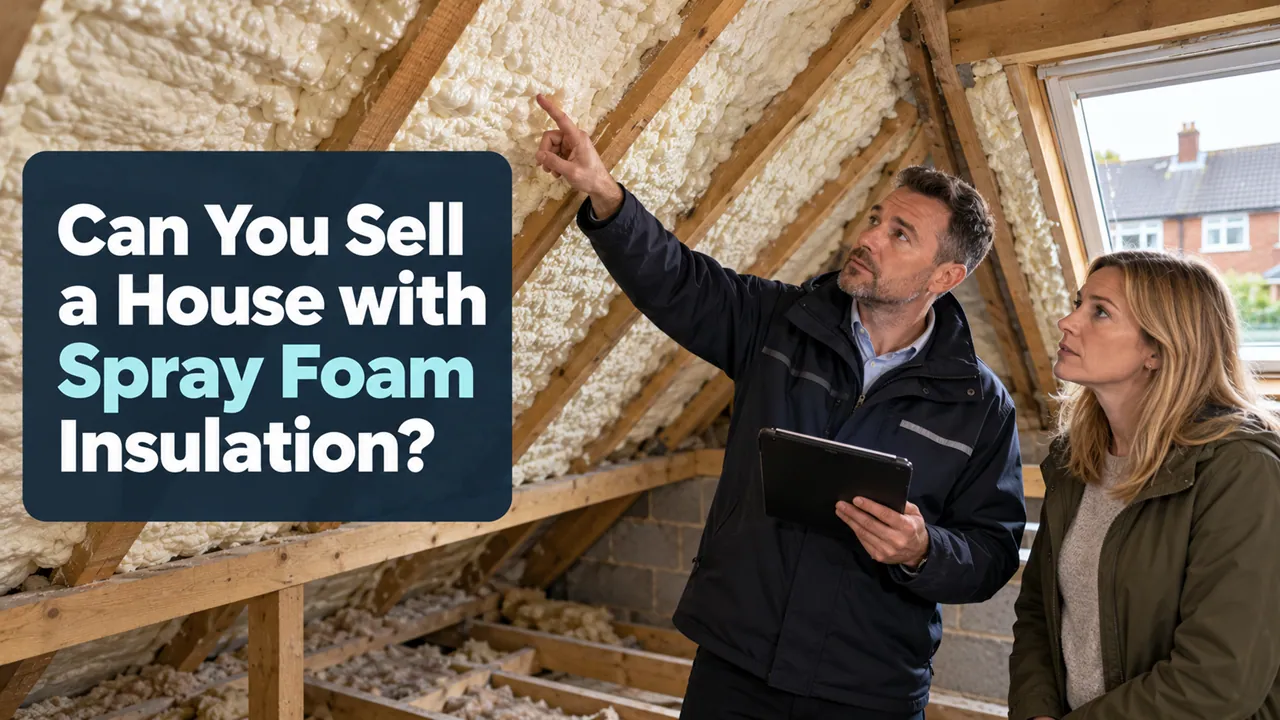
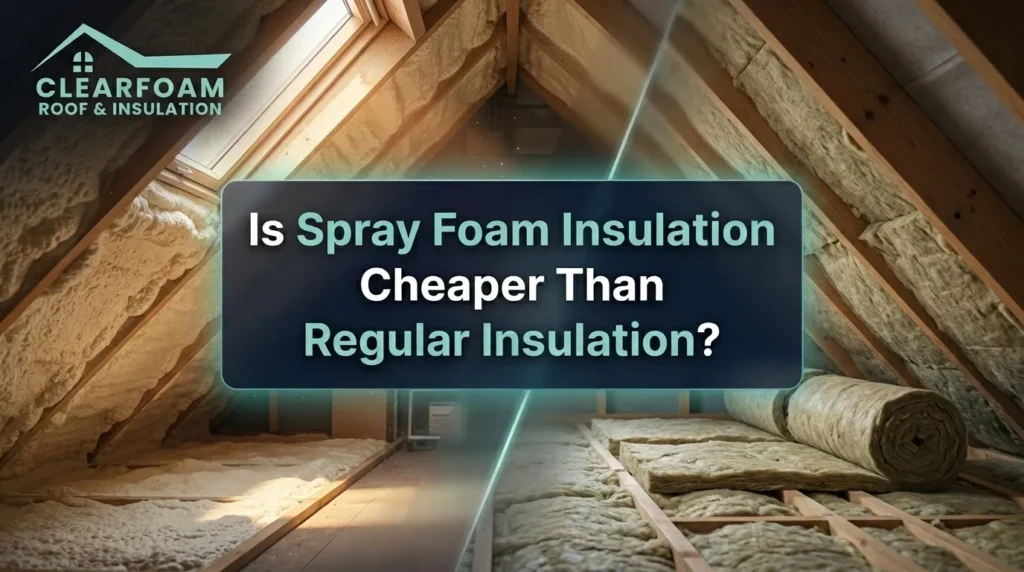
The first question we hear from homeowners considering spray foam is: is spray foam insulation cheaper than regular insulation? The short answer is no. Spray foam costs significantly more per square metre than mineral wool, fibreglass, or PIR boards, and the hidden costs (mortgage problems, surveyor down-valuations, eventual removal) widen that gap once you look at the full picture.
Why Spray Foam Costs More Than Most Homeowners Realise
Regular insulation (mineral wool, fibreglass, Rockwool, PIR boards) sits at a much lower price point than spray foam, and the gap holds across lofts, walls, and roofs. The National Insulation Association’s published rates put spray foam at several times the cost of mineral fibre per square metre, before any add-on expenses get included.
When customers ask us “is spray foam insulation cheaper than regular insulation”, the honest answer is no, particularly once you factor in what happens later if you need to sell, remortgage, or remove the foam.
The Upfront Price Gap Is Bigger Than Most Quotes Suggest
For a standard three-bedroom semi-detached loft, professionally installed mineral fibre insulation sits at the lower end of the insulation cost scale. Spray foam loft insulation on the same property sits considerably higher. Closed-cell foam costs more than open-cell. Wall and roof spray foam jobs widen the gap further.
That headline figure isn’t the whole story. Spray foam quotes often skip:
- Scaffolding for external roof access on certain installations.
- Preparation costs if the existing roof needs repair before foam is applied.
- Waste removal and disposal for any old insulation being replaced.
- Day rates for the technician, since most installs run over multiple days.
- Repeat call-outs if the foam doesn’t cure correctly first time.
A like-for-like comparison on the same loft routinely shows spray foam coming in at multiples of the mineral wool figure, before any of these extras get added.
Worried About the Real Cost of Spray Foam in Bournemouth or Poole?
ClearFoam Roof & Insulation specialises in spray foam removal and lender-approved alternatives. We don’t install spray foam ourselves, which means our cost advice has no conflict of interest. The survey is free and the answer comes back honest.
Hidden Costs That Change the Equation
A lot of the cost difference shows up after the foam is installed. When you compare like-for-like, asking is spray foam insulation cheaper than regular insulation only makes sense once you include the post-install costs:
- Mortgage rejections from lenders including TSB, Halifax, Nationwide, and Skipton if spray foam is present on the underside of the roof.
- Surveyor down-valuations under RICS guidance on concealed timber.
- Higher home insurance premiums in some cases, due to fire-risk concerns.
- The need for a specialist building report to satisfy a buyer’s solicitor.
- Eventual removal costs if the property won’t sell or remortgage.
Regular insulation triggers none of these. Mineral wool, Rockwool, PIR boards, and fibreglass are all lender-accepted, surveyor-friendly, and easy to swap out.
Open-Cell, Closed-Cell, And the Alternatives Compared
Cost differences vary depending on which spray foam product you compare, and which regular insulation it replaces.
Open-Cell Spray Foam
Open-cell is the cheaper of the two foam types. It’s lighter, less dense, and lets some moisture through. Even at its lower price point, open-cell foam costs several times more per square metre than mineral wool.
Closed-Cell Spray Foam
Closed-cell is the premium product. It’s rigid once set, acts as a vapour barrier, and adds a small amount of structural rigidity. The price sits at the top end of the insulation cost range and significantly above open-cell foam, mineral wool, and PIR boards.
Mineral Wool, Rockwool and PIR Boards
The standard alternatives. Mineral wool rolls at 270mm depth meet the current Building Regulations recommendation for loft insulation and cost a fraction of what spray foam does. Rockwool slabs and PIR boards (Kingspan, Celotex) sit above basic mineral wool but still well below spray foam, and all carry BBA certification for the applications they’re designed for.
Anyone working out whether is spray foam insulation cheaper than regular insulation needs to compare against the right alternative for the same purpose, not just the cheapest material on the shelf.
Does Spray Foam Pay Back Through Energy Savings?
This is the strongest argument the spray foam industry makes. Foam seals air gaps better than mineral wool, so heat loss drops and bills follow. On a suitable roof, those savings are real.
The problem is the payback maths. The 50 percent bill-reduction figure quoted in marketing compares spray foam against an uninsulated property, not against a properly installed mineral wool loft. Once you put 270mm of mineral wool against 100mm of open-cell foam, the energy difference shrinks substantially, and the price gap doesn’t close.
If the question “is spray foam insulation cheaper than regular insulation” is being asked across the lifetime of the property, energy savings rarely close the gap. The RICS spray foam consumer guide makes the same point: spray foam should be treated as a significant property modification, not a quick payback play.
What We Tell Customers About Spray Foam Costs Across Bournemouth and Poole
Every assessment we do at ClearFoam Roof & Insulation includes a like-for-like cost discussion. Last month a homeowner in Christchurch had been quoted a substantial figure to spray-foam their loft. They asked us for a second opinion before signing.
We walked them through the equivalent in 270mm Rockwool with proper eaves clearance and a vapour-control upgrade at the loft hatch. The Rockwool option came in well below the foam quote, with no mortgage complications, no removal liability down the line, and the same Building Regulations compliance. They went with the mineral wool.
The pattern is consistent across Bournemouth, Poole, and Christchurch. Customers asking “is spray foam insulation cheaper than regular insulation” almost always end up better served by traditional materials, particularly on cold-roof properties where the original ventilation was never designed around spray foam.
The Mortgage and Resale Risk That Adds to The Long-Term Cost
Around 250,000 UK homes have spray foam insulation. A growing number are struggling to sell or remortgage because of it. Anyone asking is spray foam insulation cheaper than regular insulation has to factor in this risk, even if it never crystallises on their own property.
Major UK lenders flag spray foam during valuation, and the RICS guidance gives surveyors grounds to either down-value the property or refuse to certify it for lending. For some homeowners that risk stays theoretical. For others, the eventual removal plus reinsulation more than wipes out any energy savings the foam ever delivered.
Regular insulation carries none of this risk. Mineral wool, fibreglass, Rockwool, and PIR boards are all standard, accepted materials that surveyors and lenders treat as a positive on the EPC and a neutral on the valuation.
Frequently Asked Questions
Is Spray Foam Insulation Cheaper Than Regular Insulation in the Long Run?
No. Even before factoring in mortgage and resale issues, the higher upfront cost takes longer to pay back than mineral wool or PIR boards. Once removal and reinsulation are included, the lifetime cost is substantially higher.
Is Spray Foam Insulation Worth the Extra Cost?
For most UK homes, no. The RICS consumer guide treats spray foam as a major property modification rather than a routine upgrade. For specialist applications (hard-to-access cavities, certain commercial roofs) it can be justified. For standard lofts, mineral wool at 270mm delivers the same Building Regulations compliance for a fraction of the cost.
Will Spray Foam Insulation Save Money on Energy Bills?
Yes, but compared against an uninsulated home. Compared against a properly installed mineral wool loft at the current recommended depth, the bill savings narrow significantly and rarely justify the price gap.
What’s The Cheapest Insulation That Meets UK Building Regulations?
Mineral wool or fibreglass at 270mm depth in the loft, laid between and over joists, meets the current Building Regulations and sits at the lowest end of the insulation cost range. PIR boards (Kingspan, Celotex) sit slightly higher but still well below spray foam.
Is Spray Foam Insulation Cheaper Than Regular Insulation If You Fit It Yourself?
You can’t DIY spray foam. The product requires BBA-certified installers, specialist equipment, and protective gear because of the fumes during application. Mineral wool is straightforward to roll out yourself, which widens the cost gap further.