A homeowner in Bournemouth rang us last autumn after her buyer pulled out the day after the RICS Home Survey Level 3. The reason wasn’t the closed-cell spray foam itself — it was applied competently — but the missing installer paperwork and the surveyor flagging it as a structural concern. Her sale of 11 months collapsed in 24 hours. We removed the foam, the buyer came back, and the sale completed within six weeks at the original price.
The short, honest answer to “does spray foam insulation devalue your house” is: it can, significantly, but it depends on several specific factors. This guide cuts through the scare stories and the dismissive denials with a clear, UK-specific assessment, written by ClearFoam Roof & Insulation for homeowners weighing what to do next. We’ll show you when spray foam is genuinely a problem, when it’s not, and what to do about it depending on your situation.
Does Spray Foam Insulation Devalue Your House in the UK?
Yes, spray foam insulation can devalue your house in the UK, particularly when installed on the underside of the roof (sarking), when paperwork is missing, when closed-cell foam has been used, or when the installation traps moisture against timber rafters. Recent RICS guidance and lender caution mean buyers and mortgage providers routinely flag spray foam, with up to 40% of UK buyers hesitating on properties with it.
The impact splits into three risk tiers:
- Low risk: Open-cell foam, full paperwork, ventilation maintained, on walls or floors.
- Moderate risk: Closed-cell foam on rafters with paperwork, no moisture damage.
- High risk: Closed-cell foam without paperwork, no ventilation, signs of moisture or rot.
Whether spray foam insulation devalue your house depends entirely on which tier your installation falls into. Most problem cases involve closed-cell foam applied to roof rafters without proper ventilation.
Why Spray Foam Insulation Affects UK Property Value
Spray foam insulation affects UK property value because mortgage lenders and RICS surveyors have raised serious concerns about hidden defects, moisture risk, and inability to inspect roof timbers through the foam. Lenders increasingly refuse to lend on properties with spray foam on roof structures, which collapses the buyer pool and forces sellers to accept lower offers or remove the foam before sale.
Why Lenders Hesitate
- Hidden defects cannot be inspected through applied foam.
- Moisture traps can form between foam and roof underlay.
- Ventilation required under Building Regulations Part F is often compromised.
- Timber rot in rafters may develop without visible warning signs.
- No standardised certification for many older installations.
Lenders Known to Refuse or Restrict Spray Foam Properties
Lenders that have publicly stated caution include Halifax, Nationwide, Barclays, Santander, and several smaller building societies. Lending criteria changes frequently, so the safe assumption is that any property with closed-cell foam on the roof will face questions during the mortgage process, particularly with major high-street lenders.
This is the practical reason spray foam insulation devalue your house concerns matter. Without mortgage finance, your buyer pool shrinks dramatically.
What RICS Surveyors Look For
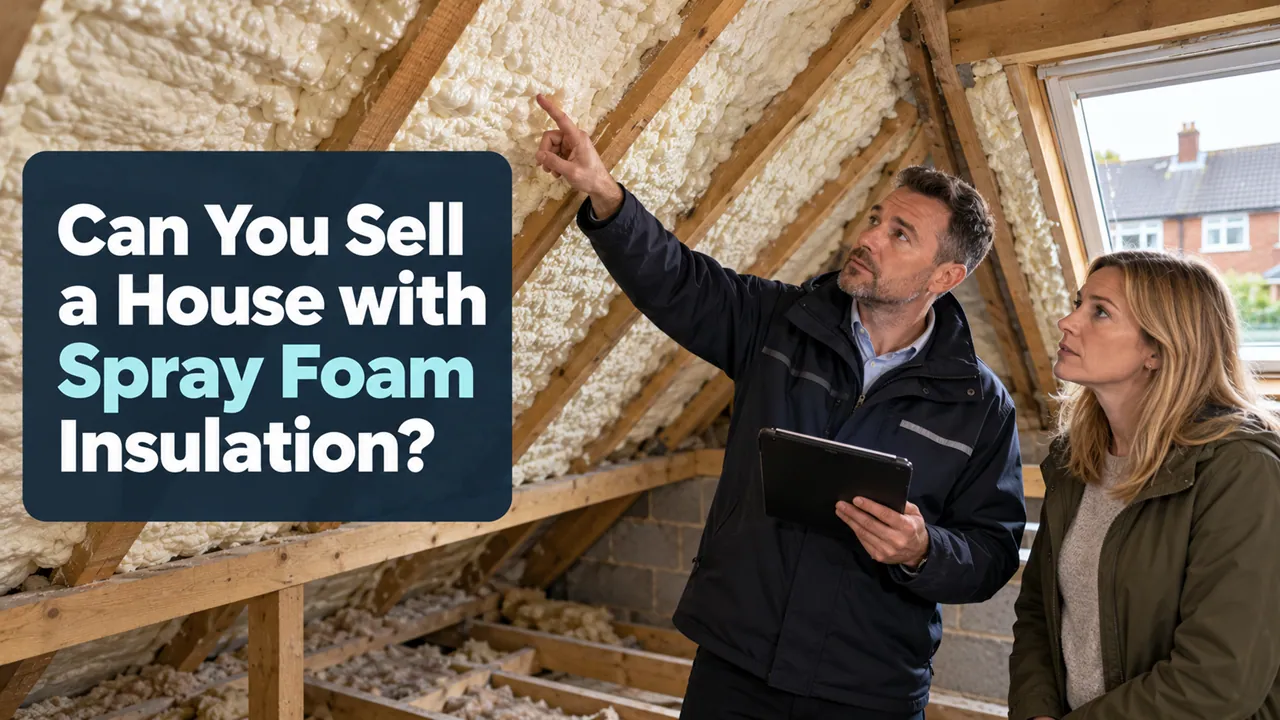
RICS Home Surveys at Level 2 and Level 3 routinely flag spray foam as a defect requiring further investigation. Surveyors look for signs of moisture damage, lack of ventilation, missing installation paperwork, and any indication that the foam is hiding underlying problems. A Level 3 survey will usually recommend specialist inspection before lender approval can proceed.
What Surveyors Flag
- Visible spray foam on the underside of the roof.
- Lack of ventilation at eaves or ridge.
- Damp or staining at the foam/underlay interface.
- Missing installer certificate or warranty documents.
- Closed-cell vs open-cell identification (closed-cell raises more concern).
Why Paperwork Matters
A competent installation with British Board of Agrément (BBA) certification, full installer warranty, and paperwork aligned with Property Care Association (PCA) standards can pass survey relatively cleanly. The same physical installation without paperwork often gets flagged. This is one of the more frustrating realities of how spray foam insulation devalue your house claims play out.
Should You Remove Spray Foam Before Selling?
You should remove spray foam before selling if your property has closed-cell foam on the roof, missing paperwork, any sign of moisture damage, or if your estate agent reports buyers walking away. Removal restores buyer confidence, opens up the full mortgage market, and typically recovers the cost through a higher sale price and faster sale.
Decision Guide by Audience
If you’re selling:
- Remove closed-cell foam without paperwork before listing.
- Get a CCTV roof inspection or specialist survey.
- Replace with mineral wool or other lender-friendly insulation.
- Keep all removal and re-insulation paperwork for the buyer.
If you’re buying:
- Insist on a Level 3 survey if foam is mentioned.
- Get a specialist spray foam inspection separately.
- Factor in removal costs to your offer.
- Confirm your lender will approve before exchange.
If you’re staying put with a mortgaged property:
- Check your mortgage terms for insulation clauses.
- Consider removal if you plan to remortgage soon.
- Watch for condensation or mould at the eaves.
This decision tree resolves most of the practical questions around does spray foam insulation devalue your house planning.
Worried About Spray Foam on Your Property?
ClearFoam Roof & Insulation provides professional spray foam removal and free roof assessments across Bournemouth, Poole, Christchurch, and the South of England. We handle both open-cell and closed-cell removal cleanly, with full paperwork for your buyer or lender. Call or book a free spray foam survey today.
How Spray Foam Is Removed Safely
Spray foam is removed safely through manual removal by trained operatives, working from the underside of the roof with appropriate PPE and dust extraction. The process is methodical, requires care to avoid damaging roof underlay and rafters, and is followed by inspection and re-insulation with a lender-friendly product. ClearFoam Roof & Insulation specialises in clean, complete removal.
What the Removal Process Involves
- Initial survey to identify foam type, extent, and any moisture damage.
- Site preparation with dust sheets and ventilation control.
- Manual removal in sections, avoiding damage to underlay and rafters.
- Inspection of revealed timbers, underlay, and roof structure.
- Re-insulation with mineral wool or other lender-friendly product.
- Full paperwork for surveyor and lender records.
Why DIY Removal Is a Bad Idea
Spray foam, particularly closed-cell, is extremely adhesive and aggressive to remove. DIY attempts routinely damage the roof underlay, batten fixings, and surrounding timbers, turning a manageable removal job into a full re-roof. The cost of fixing DIY damage almost always exceeds professional removal in the first place.
Common Mistakes Homeowners Make with Spray Foam
The most common mistakes homeowners make with spray foam are letting it be installed in the first place without checking lender implications, trusting cold-callers and door-to-door sellers, accepting installations without proper certification, and trying to ignore the issue when selling. Each one worsens the spray foam insulation devalue your house impact.
- Trusting cold-callers offering “free” or grant-funded installation.
- No paperwork from the installer.
- Closed-cell on a roof needing ventilation.
- Ignoring early signs of condensation or mould.
- DIY removal attempts that damage the roof.
The pattern is consistent: the cheaper or quicker the original installation, the more expensive the problem becomes later.
What Homeowners Most Often Ask About Spray Foam and Property Value
Will Every Mortgage Lender Refuse a House with Spray Foam?
No, not every lender will refuse. Some smaller building societies and specialist lenders will consider spray foam properties on a case-by-case basis, particularly with full paperwork and a clean survey. However, most major high-street lenders treat spray foam on roof structures with significant caution, which is the main reason spray foam insulation devalue your house in practical buyer-pool terms.
Is Open-Cell Spray Foam Less Problematic Than Closed-Cell?
Yes, generally. Open-cell foam is more breathable, doesn’t trap moisture as severely, and is easier to remove if needed. Closed-cell foam is denser, more adhesive, and harder to remove, and raises more lender and surveyor concern. However, both types can cause problems without proper ventilation, certification, and installation quality.
Can I Just Leave Spray Foam in Place If I’m Not Selling?
Possibly, but watch for condensation, mould, and any signs of timber damage at the eaves. If you plan to remortgage, sell, or release equity in the future, the issue will reappear at that point. Many homeowners choose to remove proactively rather than face it during a time-pressured sale or remortgage application.
What Replaces Spray Foam After Removal?
Most ClearFoam projects replace removed spray foam with mineral wool quilt insulation between and over the rafters, or with breathable insulation board systems. These options are lender-approved, meet Building Regulations Part L for thermal performance, and restore proper ventilation. The result is a saleable, mortgageable, energy-efficient property.
Does Removing Spray Foam Improve Property Value Immediately?
Yes, in most cases. Removing problematic spray foam typically restores access to the full mortgage market and removes a major buyer objection. UK property reports have shown buyer interest can rise by up to 30% after professional removal. The recovered value usually exceeds the removal cost, making it a sensible investment for sellers.