Most homeowners invested in closed-cell spray foam as a forever fix for rising energy bills. However, by early 2026, the narrative has shifted from efficiency to structural survival. I have stood in many Dorset lofts where what looked like solid insulation was actually a ticking time bomb for the roof structure. At ClearFoam Roof & Insulation, we are seeing a surge in closed cell spray foam removal Bournemouth requests, primarily driven by a hardening of UK mortgage lender policies and the discovery of hidden timber decay.
If you are worried about your loft insulation, you must distinguish between a high-performing thermal envelope and a dangerous vapour trap. Unlike open-cell foam, the closed-cell variety is a rigid polyurethane plastic that acts as a total air barrier. While this stops drafts, it also stops the timber rafters from breathing, leading to a catastrophic buildup of interstitial condensation.
1. Mortgage Rejection or Surveyor Red Flags
The most immediate sign you need spray insulation removal Bournemouth isn’t always physical; it is financial. As of 2026, over 50 major UK lenders, including Nationwide, Santander, and Halifax, have introduced strict automatic decline or specialist report triggers for properties with spray foam. The Royal Institution of Chartered Surveyors (RICS) guidance now explicitly warns that because foam prevents a visual inspection, the structural integrity of the roof cannot be verified.
At ClearFoam Roof & Insulation, we frequently assist clients whose equity release or remortgage applications have hit a dead end. If a valuer marks your property as zero valuation due to untraceable timber health, professional closed cell spray foam removal Bournemouth is your only path to restoring marketability. We provide the lender-compliant documentation and post-removal certification that banks require to clear your file.
The Equity Release Barrier
Many homeowners in their 70s find their financial safety net vanish when equity release surveyors spot closed-cell foam. These firms view the permanent bond between the foam and roof tiles as an unquantifiable liability for future re-roofing.
Surveyor Access Protocols
A RICS surveyor requires access to the lignin of the wood. Because closed-cell foam has high compressive strength and acts like a glue, it must be manually extracted to allow for moisture testing and rot assessment.
2. Musty Odours and Sweating Timbers
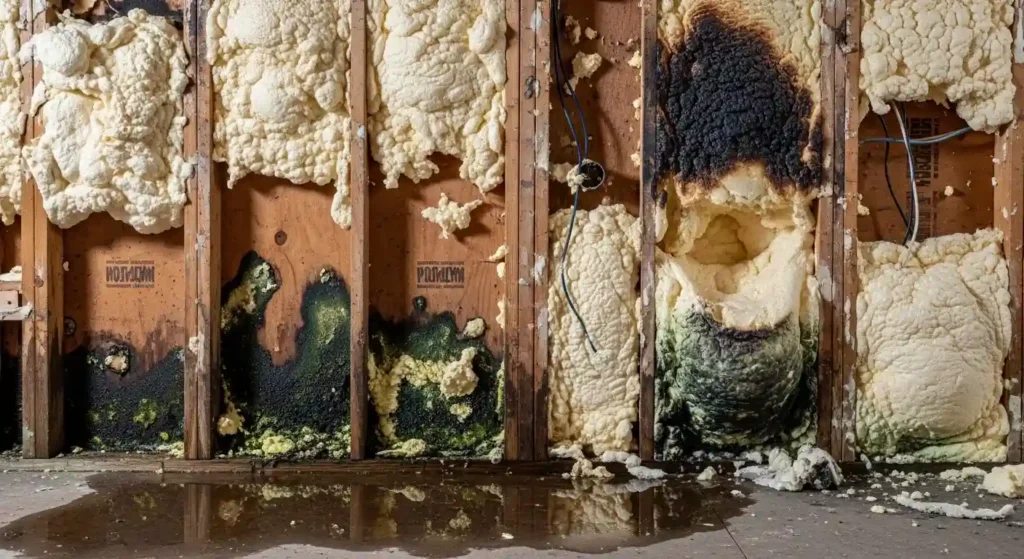
If you open your loft hatch and are met with a damp forest smell or a sharp chemical odour, your insulation is likely failing. Closed-cell spray foam creates an airtight seal that traps moisture against the purlins and ridge boards. This creates a microclimate for wet rot and dry rot to flourish entirely out of sight.
I recently inspected a 1930s detached home where the owner noticed a musty smell in the master bedroom. Once we began the spray insulation removal Bournemouth process, we found the bitumen felt had disintegrated, and the rafters were literally sweating behind the foam. Restoring the eave-to-ridge airflow is the only way to save the roof deck from total collapse.
Chemical Off-Gassing
If the isocyanate and polyol resin were mixed at the wrong temperature during installation, the foam can off-gas Volatile Organic Compounds (VOCs) for years. This creates a health risk to indoor air quality.
The Condensation Paradox
By stopping the transfer of heat, the foam makes the outer surface of the wood extremely cold. When vapour from the house hits this cold timber behind the foam, it turns into liquid water with no way to evaporate.
3. Spongy Wood or Dark Staining at Foam Edges
Because closed-cell foam is so rigid, it can hide structural movement until it is too late. You should inspect the points where the foam meets the rafter feet or the gable wall. If you see dark, water-stained rings or if the wood feels soft when pressed with a screwdriver, you have a timber degradation issue.
At ClearFoam Roof & Insulation, we use Protimeter moisture meters to find these hot zones. If the moisture content in your timbers exceeds 20%, the risk of fungal decay is critical. Our closed cell spray foam removal Bournemouth service includes a full timber treatment to stop rot in its tracks after the foam is cleared.
The Screwdriver Test
Gently press a tool into the wood at the edge of the foam. If it sinks in or the wood “flaked” away, the structural cellulose has been destroyed by trapped humidity.
Rust on Galvanised Fixings
Look for rust on joist hangers or clout nails. Metal oxidation inside a loft is a guaranteed sign that the relative humidity is far too high due to the vapour barrier effect.
4. Visible Roof Sagging or Cracked Tiles
Closed-cell foam is a high-density product that adds significant weight to a roof structure. When applied to an older roof not designed for the load, it can cause the roof line to bow or sag. Furthermore, because the foam glues the battens and tiles together, the roof can no longer expand and contract with the seasons.
If you see a dip or distortion in your roof tiles from the street, the foam is likely pulling on the structural frame. Unlike open-cell foam, which is flexible, closed-cell is brittle. As the house moves, the foam cracks, creating thermal bridges that suck heat out of your home. Professional Spray Insulation Removal Bournemouth is the only way to allow your roof to move naturally again.
Inability to Repair
A single broken tile becomes a £1,000+ repair when foam is present. You cannot simply slide a new tile in; the roofer Bournemouth must hack away at the foam, often damaging the breathable underlay in the process.
Restricted Ventilation Pathways
Even if you have soffit vents, the foam often blocks the ventilation gap between the insulation and the roof covering, nullifying your home’s passive cooling system.
5. Rising Energy Bills and Internal Damp Patches
It is the ultimate irony: you installed foam to save money, but now your bills are climbing. This happens when the foam delaminates (pulls away) from the rafters. These gaps act like chimneys, creating a stack effect that pulls warm air out of your living rooms and into the loft void.
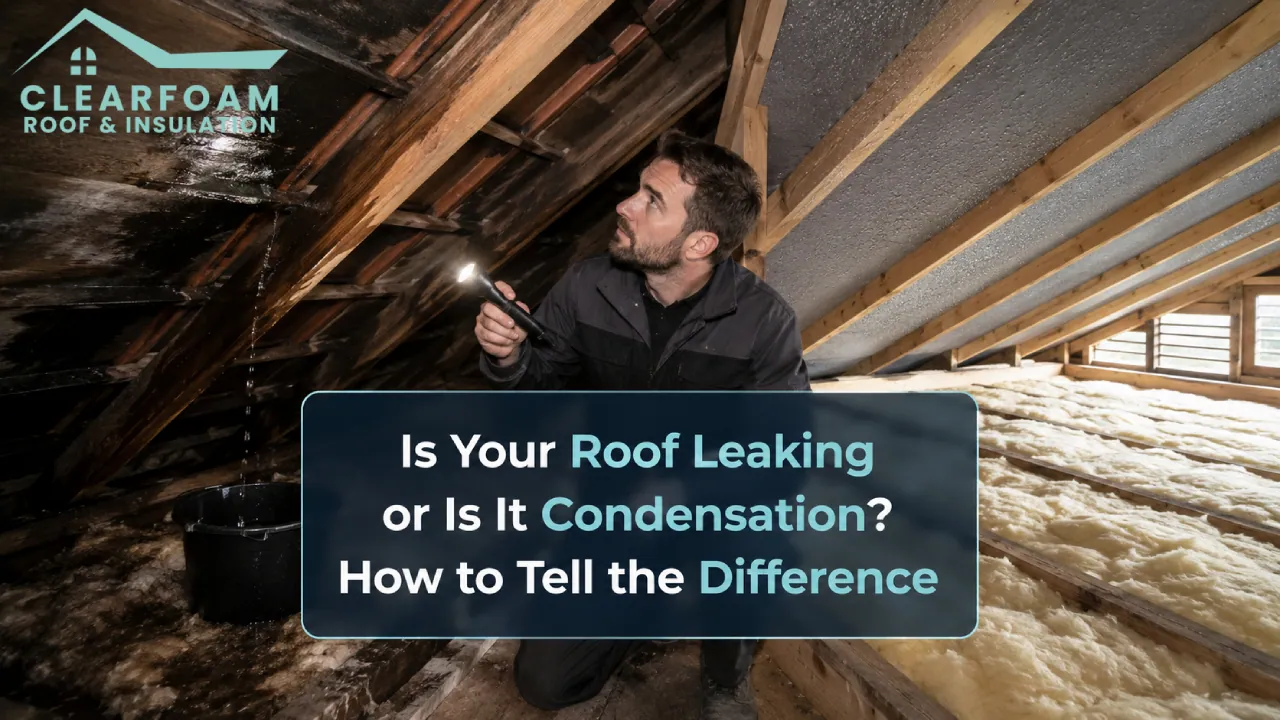
If you see damp patches on your top-floor ceilings, do not assume it is a leak. It is often interstitial condensation from the foam dripping onto the plasterboard. At ClearFoam Roof & Insulation, we replace failing foam with breathable mineral wool or PIR boards with a dedicated 50mm air gap, ensuring your U-values actually perform as promised.
The Flash Point
When moisture saturates the plasterboard from above, it can cause the ceiling to bow. This is a primary sign that your spray insulation removal Bournemouth project needs to happen immediately to avoid a ceiling collapse.
Shrinkage Cracks
Inferior polyurethane products can shrink by up to 10% over time. These cracks are invisible to the homeowner but are clearly visible to an infrared thermal camera.
The Professional Removal Process: Why We Outperform Competitors
Unlike general roofing contractors Bournemouth, we follow a forensic removal protocol designed to satisfy lender criteria.
- HEPA Containment: We seal the loft hatch and use negative air pressure to ensure no toxic dust or particles enter your living space.
- Manual Extraction: We use oscillating precision tools to strip the foam while preserving the timber grain.
- Post-Removal Certification: Every ClearFoam Roof & Insulation client receives a comprehensive Completion Pack, including before-and-after photos, timber moisture readings, and a waste transfer note.
Frequently Asked Questions: Spray Foam Removal
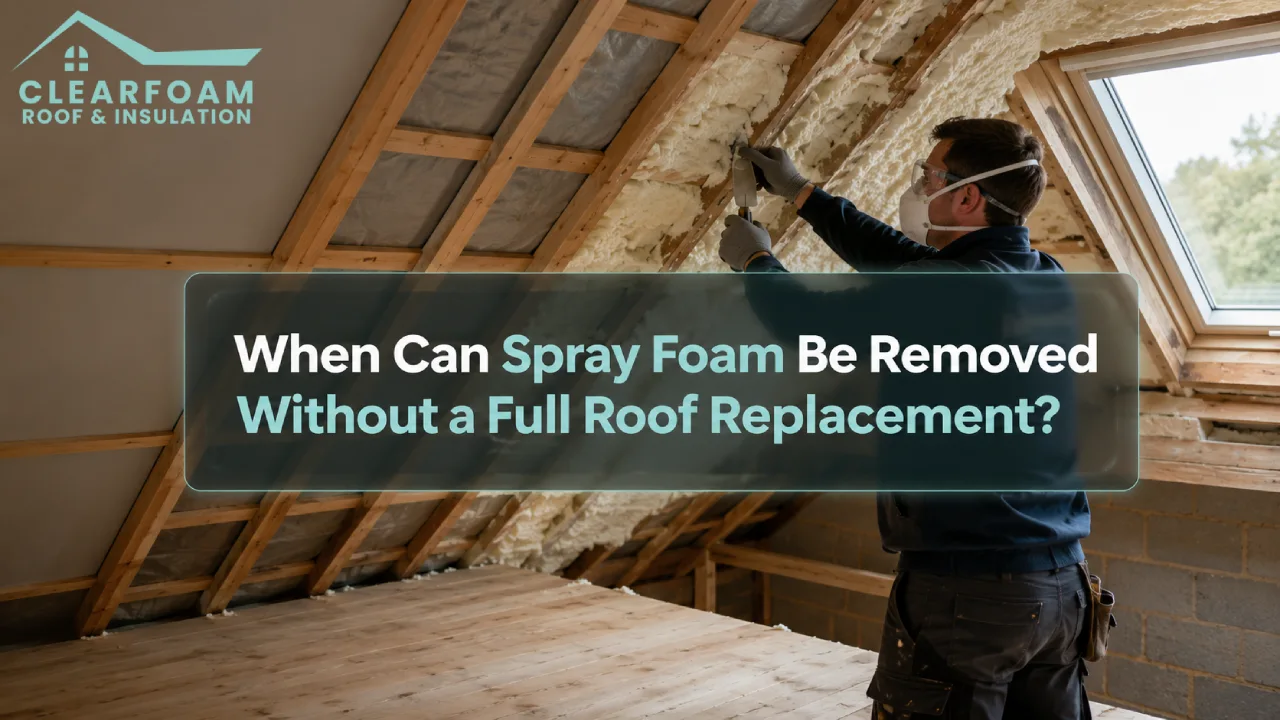
1. Is It Possible to Remove Closed Cell Spray Foam Without Reroofing?
Yes. While competitors often suggest a full reroof, our manual extraction method allows us to remove the foam from the inside. We carefully separate the foam from the felt and battens, saving you thousands of pounds compared to a total roof replacement Bournemouth.
2. How Much Does Closed Cell Spray Foam Removal Bournemouth Cost In 2026?
The price typically ranges from £50 to £75 per square metre. For a standard semi-detached house, you should budget between £3,500 and £5,500. This is a small price compared to the 20% property devaluation caused by having unmortgageable insulation.
3. Why Do Mortgage Lenders Hate Spray Foam?
Lenders follow RICS guidance which states that foam hides the structural condition of the roof. If they cannot see the rafters, they cannot be sure the house will stand for the 25-year duration of the mortgage. Removal restores the transparency they require.
4. Can I Remove the Foam Myself to Save Money?
We strongly advise against DIY removal. Closed-cell foam is incredibly tough and often hides electrical wiring. One slip of a saw can cut your power lines or gouge a load-bearing rafter. Furthermore, lenders will only accept removal if it is certified by a professional firm.
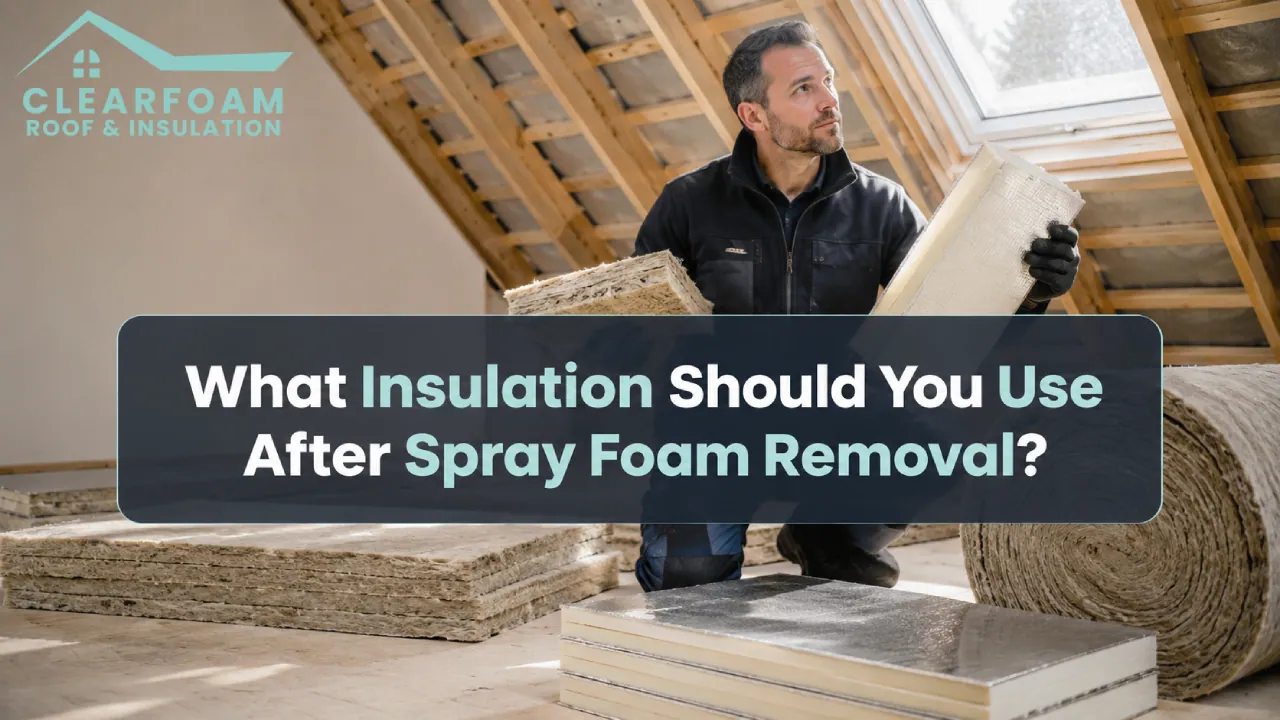
5. What Is the Best Insulation To Use After Removal?
We recommend breathable mineral wool or natural fibre insulation. These materials allow moisture vapour to pass through freely, preventing rot and ensuring your home complies with UK Building Regulations Part L.
Conclusion: Recover Your Property’s Value
Ignoring the signs of failing closed-cell foam is not an option in today’s property market. Whether you are facing a mortgage rejection or smelling the first signs of damp, the solution is professional closed cell spray foam removal Bournemouth. At ClearFoam Roof & Insulation, we don’t just remove foam; we restore your home’s health and your financial peace of mind.