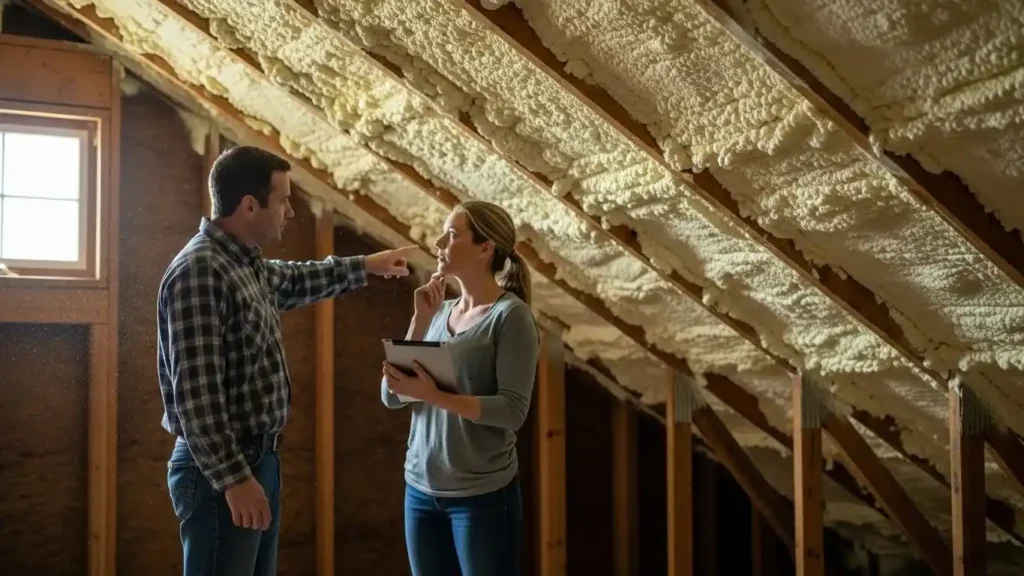
Spray insulation has revolutionised energy efficiency in Bournemouth properties, creating airtight thermal barriers that dramatically reduce heating and cooling costs. However, the critical question remains whether this high-performance insulation eliminates the traditional requirement for roof ventilation, a concern affecting thousands of UK homeowners considering spray foam installation.
This comprehensive guide examines the relationship between spray insulation and ventilation, exploring when ventilation becomes unnecessary, which scenarios demand continued airflow, and how Bournemouth property owners can make informed decisions protecting both energy efficiency and structural integrity.
Understanding Spray Foam Insulation Types and Characteristics
Closed cell spray foam insulation consists of densely packed cells completely sealed to block air passage, delivering exceptional R values of 6 to 7 per inch alongside superior moisture resistance. This rigid foam creates impermeable barriers that prevent water vapour transmission, making it ideal for exterior applications in Bournemouth’s coastal climate where moisture control proves essential.
Open cell spray foam features a softer, less dense structure with interconnected cells that allow some vapour permeability, delivering R values of 3.5 to 3.8 per inch. This foam excels at filling irregular spaces and providing soundproofing benefits whilst remaining more affordable than closed cell alternatives. However, its moisture absorbing properties require careful consideration in ventilation planning, particularly for Bournemouth properties facing persistent dampness from coastal weather patterns.
Read Also: Why Are People Removing Spray Foam Insulation?
The Critical Role of Roof Ventilation
Traditional roof ventilation systems maintain steady airflow through attic spaces, regulating temperature extremes that accelerate roofing material deterioration and shorten roof lifespans. Proper ventilation removes excess heat during summer months, preventing attic temperatures exceeding 65°C that damage shingles, warp timber, and strain cooling systems.
- Winter ventilation allows moisture laden air to escape before condensation forms on cold roof decking surfaces
- Moisture control through ventilation prevents destructive mould growth, wood rot, and structural damage costing thousands
- Stagnant humid air trapped in sealed roof spaces creates ideal conditions for fungal colonisation compromising indoor air quality
- Energy efficiency improves when ventilation maintains stable attic temperatures, reducing thermal loads on HVAC systems
- Traditional ventilation removes heat buildup that can increase cooling costs by 10% to 15% annually
Bournemouth’s coastal climate with persistent humidity makes proper ventilation particularly critical for preventing moisture related damage in traditional roof systems. ClearFoam Roofing & Insulation evaluates ventilation requirements based on your property’s specific exposure to coastal weather patterns and existing moisture control measures.
When Spray Insulation Eliminates Ventilation Requirements
Conditioned Attic Spaces
Applying closed cell spray foam directly to the underside of roof decking transforms attics into conditioned spaces maintained at interior temperatures. This sealed attic approach eliminates temperature differentials between living areas and roof spaces, removing the primary driver requiring traditional ventilation systems.
Complete Air Sealing Benefits
The airtight seal created by properly installed spray foam prevents outside air infiltration that carries moisture into roof structures. This comprehensive barrier stops the convective loops that traditional ventilation systems attempt to manage, addressing moisture problems at the source rather than through reactive air exchange.
Climate Specific Advantages
Bournemouth’s moderate maritime climate with consistent humidity levels particularly benefits from sealed, conditioned attic designs that maintain stable moisture levels. The closed cell foam’s vapour barrier properties prevent coastal moisture from penetrating roof structures, a persistent problem in traditional vented attic systems.
Situations Requiring Continued Ventilation with Spray Insulation
Open cell spray foam installed on attic floors rather than roof decks creates unconditioned attic spaces that absolutely require traditional ventilation systems. The foam’s vapour permeable nature allows moisture to pass through, necessitating ventilation to remove humidity before condensation damages roof structures. Ridge vents paired with soffit vents establish continuous airflow that prevents moisture accumulation despite the insulation layer below.
Mixed insulation approaches combining spray foam with fibreglass or cellulose demand careful ventilation planning to manage the varied vapour transmission rates. Partially sealed attic spaces with spray foam covering only roof sections create air pressure imbalances requiring mechanical ventilation to maintain proper airflow. Bournemouth properties retrofitting spray foam to existing roofs must assess current ventilation adequacy to prevent trapping moisture between old and new building layers.
Ventilation Systems Compatible with Spray Foam Installations
Ridge vents positioned along roof peaks work synergistically with soffit vents under eaves to create natural convection currents in unconditioned spray foam attics. This passive ventilation requires no energy input whilst effectively managing temperature and moisture throughout the year. Bournemouth installers recommend maintaining at least 1 square foot of ventilation per 150 square feet of attic floor space when combining spray foam with traditional vents.
- Exhaust fans and whole house ventilators provide active air exchange in conditioned attics where passive ventilation proves inadequate
- Energy recovery ventilators capture heat from exhausted air, maintaining efficiency whilst ensuring proper air quality in sealed spray foam environments
- Specialist vapour diffusion ports allow controlled moisture vapour escape without compromising thermal envelope integrity
- Mechanical ventilation with dehumidification suits Bournemouth’s coastal climate, managing persistent humidity whilst maintaining thermal efficiency
- Adjustable humidity-controlled systems match ventilation rates to actual moisture loads rather than providing constant airflow
ClearFoam Roofing & Insulation designs ventilation solutions tailored to your specific spray foam installation, ensuring optimal moisture management without sacrificing energy efficiency. Professional assessment determines the most cost-effective ventilation approach based on foam type, application location, and Bournemouth’s unique coastal climate conditions.
Understanding Spray Foam Removal Costs in Bournemouth
Standard Removal Pricing
Professional Spray Foam Insulation Removal averages £50 to £80 per square metre across Bournemouth, significantly less than the £10,000 to £30,000 roof replacement costs resulting from improper installation. Open cell foam removal typically costs 20% to 40% less than closed cell extraction due to the softer material structure and easier physical removal.
Typical Project Costs
A typical 100 square metre loft requires £2,500 to £5,000 for complete spray foam removal, timber cleaning, and preparation for alternative insulation. Closed cell spray foam’s rigid adhesion to roof timbers demands intensive labour, specialist tools, and extended removal timeframes that increase costs substantially.
Additional Expenses
Hidden timber damage discovered during removal adds £1,000 to £5,000 for structural repairs before new insulation installation proceeds. ClearFoam Roofing & Insulation offers transparent spray foam removal pricing with detailed assessments identifying all costs before work commences.
FAQ’s About Spray Insulation and Roof Ventilation in Bournemouth
Does Spray Insulation Completely Eliminate Roof Ventilation Needs?
Only when closed cell foam is applied to roof decking creating conditioned attics; unconditioned attics with floor insulation still require traditional ventilation systems.
What Happens If Ventilation Is Removed from Open Cell Foam Roofs?
Moisture accumulates causing mould growth, wood rot, and structural damage as the vapour permeable foam cannot prevent humidity buildup without airflow.
Can I Add Spray Foam to Existing Ventilated Roofs Safely?
Yes, but requires professional assessment to determine whether ventilation should remain, be sealed, or be modified based on foam type and application location.
How Much Does Spray Foam Removal Cost in Bournemouth?
Professional removal averages £50 to £80 per square metre, with typical 100 square metre lofts costing £2,500 to £5,000 for complete extraction.
Which Spray Foam Type Requires Less Ventilation Consideration?
Closed cell foam applied to roof decks eliminates ventilation needs entirely, whilst open cell foam on attic floors demands continued ventilation for moisture management.
Do Building Regulations Allow Sealed Attics Without Ventilation?
Most UK jurisdictions permit sealed conditioned attics with closed cell foam, though some areas maintain minimum ventilation requirements regardless of insulation type.
What Ventilation Works Best with Spray Foam in Coastal Areas?
Mechanical ventilation with dehumidification suits Bournemouth’s coastal climate, managing persistent humidity whilst maintaining spray foam’s thermal efficiency benefits.